Horus bust (supports 3D printing)

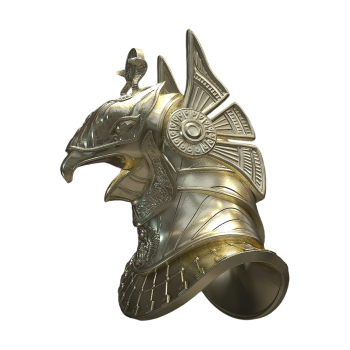
Horus bust (supports 3D printing)
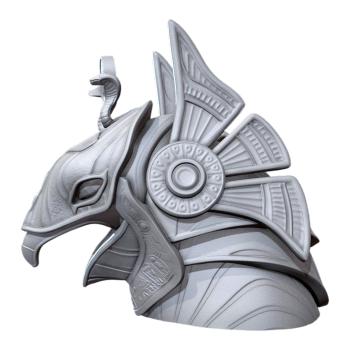
Horus (Horus), is the patron saint of the pharaoh in ancient Egyptian mythology, the symbol of kingship, but also the god of vengeance. He is the son of Osiris and Isis, the image of a hawk (falcon) head, wearing an Egyptian crown, a linen skirt around the waist, and a god holding a Voss (energy) cane and an Anka (life) symbol.
Horus sculpture (support 3D printing)

Horus sculpture (support 3D printing)

Horus (Horus), is the patron saint of the pharaoh in ancient Egyptian mythology, the symbol of kingship, but also the god of vengeance. He is the son of Osiris and Isis, the image of a hawk (falcon) head, wearing an Egyptian crown, a linen skirt around the waist, and a god holding a Voss (energy) cane and an Anka (life) symbol.
France Paris Tuileri Garden statue Nessos abducted Dianella

France Paris Tuileri Garden statue Nessos abducted Dianella

Laurent Marquist (Laurent Marqueste) created the sculpture Nessus Enlevant Dejanire in 1892. The sculpture was placed in the Tuileri Garden in Paris in 1894. Nessus, the Centaur, attempted to take Deianeira, the wife of Hercules. The sculpture is lifelike, showing Nessos's strong centaur form and its dynamic posture, conveying the conflict and tension of the myth.
Zeus head stone carving

Zeus head stone carving

It is the king of the gods in ancient Greek mythology and the head of the twelve gods of Olympus. The god of the sky and thunder and lightning, with thunderbolt as a weapon, maintains the order between heaven and earth. He is the son of the second generation god king Cronus of the Titan clan, whose mother is Ria. To avoid the fate of being devoured by Cronus, he was hidden by his mother and raised in Crete or by the Goddess Nimve. As an adult, Zeus rescued his brothers and sisters who had been devoured by his father and fought with them against Cronus, eventually overthrowing the rule of the Titans. Known for his wisdom and strength, his reign symbolized the rise of the new theocracy and the fall of the old. play a supreme role in mythology
3D model of Italian red painted double ear bottle replica

3D model of Italian red painted double ear bottle replica

It is a work imitating the 4th century southern Italian red painted double ear vase. The bottle depicts Hymelos and Eros coronating Odia. It showcases characters from ancient Greek mythology and also reflects the profound understanding of emotions and virtues in ancient art. The red painting technique of this double eared bottle is very exquisite. It is made by coating the surface of the pottery with red pigment, depicting characters and patterns, and finally applying transparent glaze and firing it. This technology makes the work colorful, vivid, and has high artistic and historical value. It is a precious artwork that combines ancient Greek mythology, artistic techniques, and cultural connotations. Showcasing the superb skills of ancient artists
Protoetic Amphora Ancient Greek Pottery - Metropolitan Museum of Art

Protoetic Amphora Ancient Greek Pottery - Metropolitan Museum of Art

It is an ancient Greek pottery, whose style originated in Athens in the 7th century BC and belongs to the early Attic period. The characteristic of this pottery is that it began to abandon abstract geometric patterns and instead adopted a naturalistic style influenced by Near Eastern art. Common decorative themes include Greek mythological scenes, animal and floral patterns. It is currently housed in the Metropolitan Museum of Art. This work depicts the battle scene between Hercules and the centaur Nessus. Hercules holds a sword and is grabbing the hair of Nessus, who is attempting to kidnap his wife Daenera. The artistic expression of pottery during this period was innovative and of great cultural and historical significance.
Attic Red Painted Pottery Box - National Museum of Athens

Attic Red Painted Pottery Box - National Museum of Athens

Depicting Leto on Delos Island, preparing to give birth to Apollo and Artemis. Originating from Eretria in the 4th century BC, it is currently housed in the National Museum of Athens. It is an ancient Greek ceramic container commonly used to store jewelry, cosmetics, or other small items. The characteristic is that its surface is decorated with a red painting style, which fills the black outline of the pottery with red, while the rest of the pottery retains its natural color or is painted black. The red painting style developed between the late 6th century BC and the 5th century BC, replacing the early black painting style.
Classical Red Statue Pottery - Igleio Archaeological Museum

Classical Red Statue Pottery - Igleio Archaeological Museum

It is a classical red statue pottery from the Kamarina site in Sicily, Italy. Produced in the 5th century BC, it is currently housed in the Igleio Archaeological Museum in Ragusa. This work showcases the image of the goddess of victory, Niki, flying and is an outstanding representative of ancient Greek art. Not only is it an artwork, but it is also an important witness to ancient Greek culture and religious beliefs. As a symbol of victory, Nike holds an important position in ancient Greek mythology, and her image is often used to decorate pottery, sculptures, and buildings, symbolizing victory and glory. This provides us with valuable physical materials for studying ancient Greek art, religion, and social life.
Ancient Greek Athens Double Eared Vase - Igleio Archaeological Museum

Ancient Greek Athens Double Eared Vase - Igleio Archaeological Museum

The Athenian binaural vase created by Antimenes painter is a ceramic artwork from ancient Greece, depicting scenes of Hercules fighting against the Nemean lion, with Athena and Iolaus present, as well as Dionysus with the mad woman and Satir. The work is from the Kamarina ruins in Sicily, Italy, belonging to the classical era and was made around the second half of the 6th century BC. Collected in the Igleio Archaeological Museum in Ragusa, Italy. Not only does it showcase the exquisite craftsmanship of ancient Greek art, but it also reflects the society's worship and artistic expression of mythological stories at that time.
Ancient Greek pottery - Castello Banfi collection

Ancient Greek pottery - Castello Banfi collection

It is a type of pottery from the ancient Greek period, named after the Etruscan region in southern Italy. Known for its unique manufacturing process and decorative style. Collected by Castello Banfi, it is characterized by the use of orange yellow clay, coated with red talcum powder on the surface, as well as black painted and white and ochre detailing. The decorative pattern depicts a wedding scene, depicting a female bride and the winged love god Eros. Discovered in PoggioalleMura, Montalcino, Italy, it reflects the artistic style of 340 BC.
Ancient Greek Red Pottery Vase - Yibelo Archaeological Museum

Ancient Greek Red Pottery Vase - Yibelo Archaeological Museum

It is an ancient Greek pottery named after its red background and black patterns. The red painted pottery vase unearthed in Camarina, Sicily, is a product of the classical period (5th century BC) and is currently housed in the Ibero Archaeological Museum in Ragusa, Italy. This kind of pottery bottle is usually used to contain oil or perfume, as burial objects at funerals, and also used in religious ceremonies. The bottle depicts a four horse chariot, which is a type of chariot pulled by four horses and commonly seen in ancient Greek mythology and art works. This demonstrates the ancient Greeks' emphasis on war and sports, as well as their worship and artistic expression of mythological stories.
Mercury Bronze Statue - Depuras Archaeological Museum

Mercury Bronze Statue - Depuras Archaeological Museum

The bronze statue of Mercury is a messenger of the gods in Roman mythology, as well as a god of livestock, thieves, commerce, transportation, tourism, and sports. It is one of the twelve main gods of Rome. Corresponding to Hermes in Greek mythology. He was Jupiter's most loyal messenger, delivering messages to Jupiter and completing various tasks entrusted to him by Jupiter. He is agile, energetic, and versatile. Usually a middle-aged man wearing a hat with wings, flying shoes, holding a wand, and walking like flying. It is currently housed in the De Plath Archaeological Museum.
L é cito Ancient Greek Ceramic Container - Metropolitan Museum of Art

L é cito Ancient Greek Ceramic Container - Metropolitan Museum of Art

It is a container used in ancient Greece to store oil, especially olive oil. This type of container typically has a slender body, a handle connecting the neck and body, and a narrow mouth without a pouring port. In ancient Greek culture, it was not only a daily necessity, but also commonly used as burial objects. Now collected in the Metropolitan Museum of Art, it is a red painted pottery belonging to the painter Tithonus, made around 480 BC. The scene depicts Athena holding a spear and helmet, showcasing the exquisite craftsmanship of ancient Greek art.
Calix Ancient Greek Shallow Bowl - Madrid

Calix Ancient Greek Shallow Bowl - Madrid

It is a type of liquid used in ancient Greece for drinking, usually for drinking wine, and is commonly seen in banquets. This container is characterized by two horizontal side handles and a large-diameter shallow bowl. The Calix created by the "Hipocontista" painter is classified as a "handleless cup". This Calix depicts scenes in Greek mythology where Pelops and Hippodamia are pulled by winged carriages, and Ennomarus and Myrtilos are pulled by another carriage. Made around 520-510 BC. Currently collected in Madrid.
Hidria Ancient Greek Ceramic Container - Paul Getty Museum

Hidria Ancient Greek Ceramic Container - Paul Getty Museum

Greek for ὑδρία, it is an ancient Greek ceramic container primarily used for storing and transporting water. The characteristic of this ceramic is that it has three handles: two horizontal side handles for lifting the container, and a vertical rear handle for pouring the contents. Around 550 BC, a hidria was produced in the Attica region, depicting scenes of Dionysus, Ariadne, and Poseidon. This artwork is currently housed in the Paul Getty Museum. This ancient Greek ceramic work not only showcases the craftsmanship of the time, but also reflects Greek mythology and religious beliefs.
L é cito Ancient Greek Ceramic Small Bottle Container - Yale University

L é cito Ancient Greek Ceramic Small Bottle Container - Yale University

It is a term used in ancient Greece to refer to various types of small bottles, which share the common feature of being used as containers for holding oil. It is a jar with a narrow bottleneck and a deep mouth. This container is not only used to store oil, ointment and perfume in the family, but also the l é cito decorated with a white background is used as a sacrifice to the dead. This work was produced in the Attica region around 500 BC and belongs to the Athenian painter. The scene depicts the sea god Poseidon riding a seahorse. Now collected at Yale University.
P í xie Ancient Greek Small Container

P í xie Ancient Greek Small Container

It is a small container from ancient Greece, usually used to store personal belongings. During the period of 490-480 BC, this container was decorated with the technique of "black pattern". It depicts a mythological scene of Athena and Poseidon competing for land in Attica. In the scene, Kekropus serves as a witness, accompanied by two knights, while a female figure runs towards the olive tree created by Athena. This scene not only showcases the mythological stories of ancient Greece, but also reflects the identity and cultural values of the Athenians.
Pure copper statue of Atlas in ancient Greek mythology

Pure copper statue of Atlas in ancient Greek mythology

One of the Titans in Greek mythology. Son of Iapetus. Due to the failure to resist Zeus, he was punished to hold his head and hands against the sky at the westernmost point of the world. Europeans usually decorate the map cover with his portrait, so the atlas is called Atlas.
Marble bust of the ancient Greek god Hercules

Marble bust of the ancient Greek god Hercules

Hercules (Ancient Greek: Ἡρακλῆς, Modern Greek: Iraklis, English: Heracles, also translated as Heracles, Heracles, Hercules, Hercules) is the greatest hero and demigod in ancient Greek mythology. After birth, he was initially named Alcides. The son of King Zeus and Alcmene, born with infinite strength.
Statue of Aphrodite of Syracuse

Statue of Aphrodite of Syracuse

This statue is made of Parian marble, 1.8 meters high, and can be traced back to the second century AD. The sculpture initially lacked a head, neck, and right arm, and was later created by sculptor Antonio Canova
Ancient Greek centaur sculpture

Ancient Greek centaur sculpture

This sculpture depicts a creature that is half human and half horse - a centaur. The hands of this sculpture are tied, and the head and torso rotate significantly to the right and tilt backwards. The right front leg of the horse is raised, and the tail is on the right side. This sculpture is a replica, with an original height of 134 centimeters. It is a replica of one of the two marble sculptures discovered during excavation work at Hadrian's Villa in Rome in 1736, located at the National Museum of Art in Krakow, Poland. In ancient Greek and Roman mythology, centaurs were a mixed race of horse and horse. Centaurs are often depicted in ancient Greek mythology as uncontrollable beasts of sexual and physical violence.
Late Roman period plaster replica statue "Bringing Hope-Athena of Farnese"
Late Roman period plaster replica statue "Bringing Hope-Athena of Farnese"

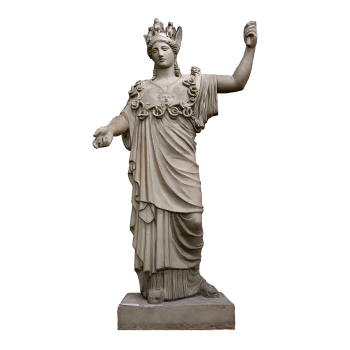
Bringing Hope-Farnese's Athena is a statue of Asina, a Roman plaster replica of a late 5th century BC Greek original. The design of the statue's intricate helmet was inspired by Asina Parthenon of the Parthenon. The repaired parts include the arms, the animal and cheek pieces on the helmet, and some amulet snakes. The statue has a height of 224cm and is now preserved in the National Museum of Naples.
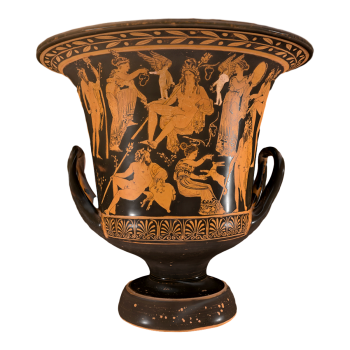
A large ancient Greek pottery basin painted with a Dionysus scene
A large ancient Greek pottery basin painted with a Dionysus scene

It is a large terracotta basin commonly used for mixing wine and can be used for banquets and religious ceremonies. It is made of red terracotta with black and red painted decoration. The Dionysus painted on the basin is the god of wine and drama in ancient Greek mythology, and is considered a symbol of joy, indulgence and banquets. The scenes on the pottery basin usually depict banquets associated with Dionysus, the entourage of the god of wine (also known as Cerenos), and other related mythological scenes. This pottery basin is usually handmade by a potter. It is used as a drinking vessel in feasts and celebrations, and may also be used in religious ceremonies and sacrifices.
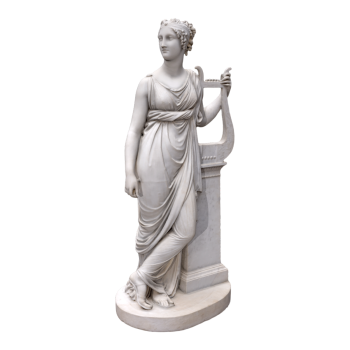
Marble statue of the Cleveland Museum of Art The Muse of Poetry

Marble statue of the Cleveland Museum of Art The Muse of Poetry

The Poetic Muse in Ancient Greek Mythology She is one of the nine Muses who inspired her creation. She holds a lyre and has a double snake-wound staff. The statue was carved out of marble by Italian sculptor Antonio Canova in 1816. It is one of nine muse statues designed by Canova for Tsar Alexander I of Russia. The statues were originally intended to be placed in the Hermitage Museum in St. Petersburg, but they were scattered to different places due to the sudden death of the Tsar. The Poetic Muse was eventually acquired by the Cleveland Museum of Art in 1968. It is one of the museum's most important collections.